
Four cars wide, a night drive between days and wraps for every car
Ten days after the sound film, a lot of the game has changed at once. These are the biggest changes.
Four cars, one strip
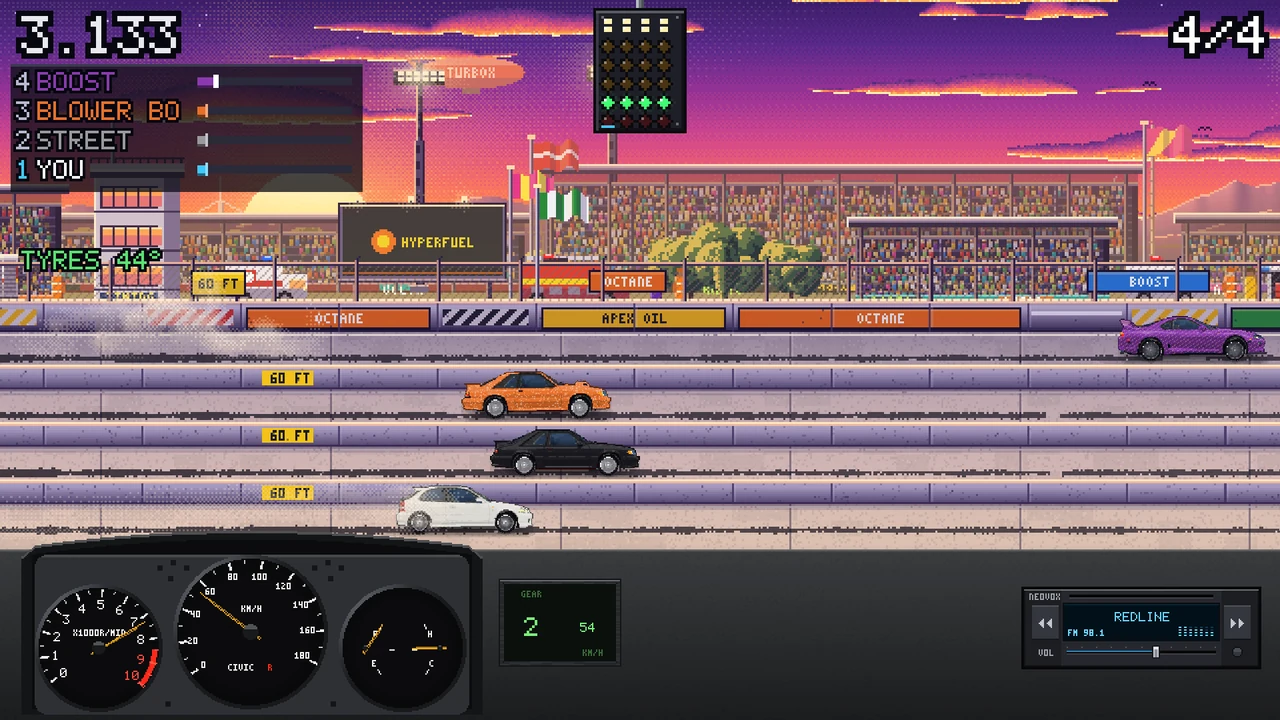
The first four-lane strip is running. You and three rivals launch side by side with barriers between the lanes, and the camera pulls back so all four cars stay on screen. A small board in the corner shows who leads. The two cars in the far lanes play quieter, so the engine you are driving stays in front.
About 30% of the races on the race board are now races for four, on asphalt, sand and mud (sand and mud run over an eighth of a mile). Each one pays out for the first three places.
The cars parked in the background of the venues are now real cars from the game too.
A funny car and a dragster at real size
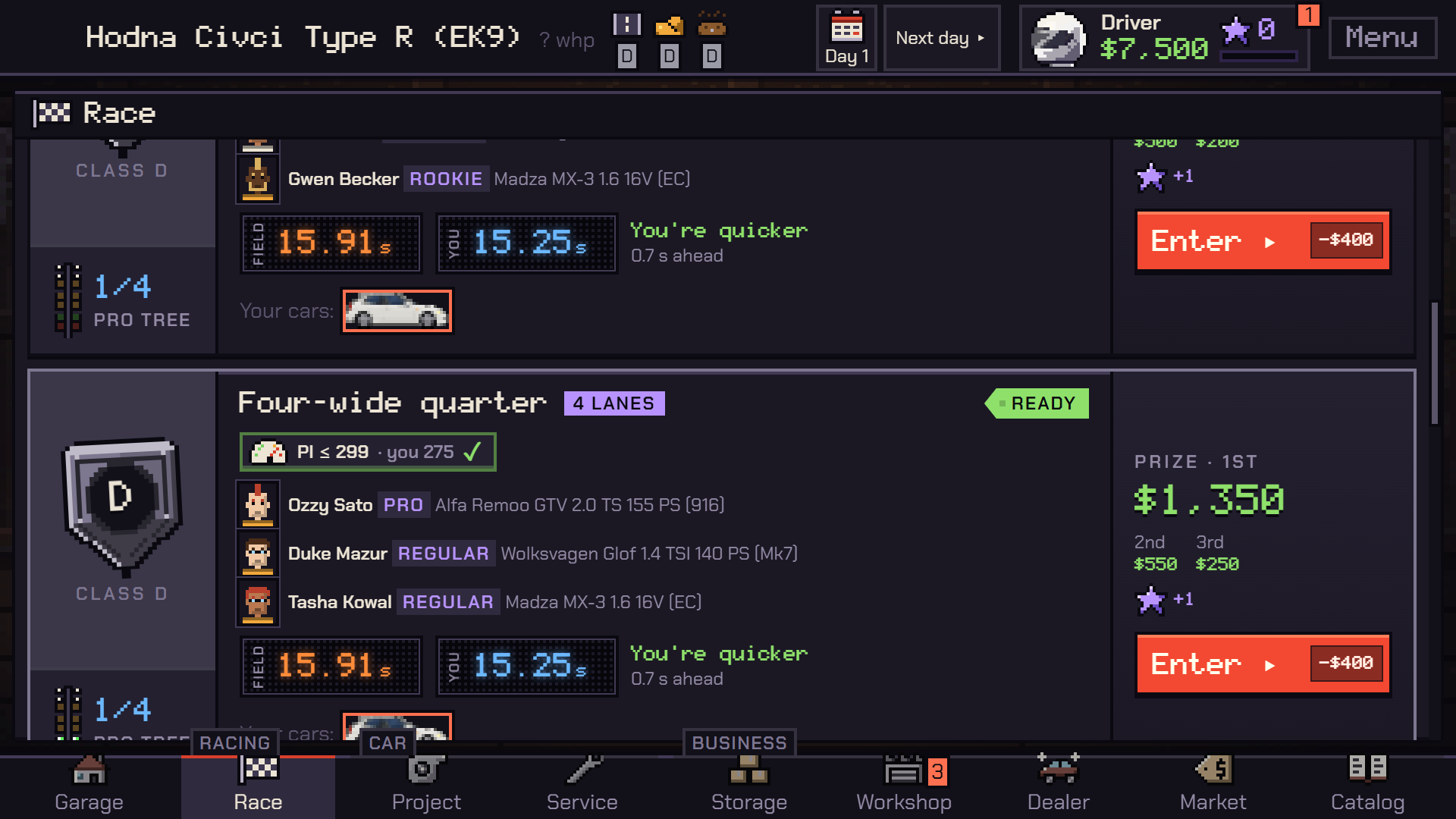
Both are now drawn at their real size. The funny car is 5.19 m long with a 3.19 m wheelbase and wheels of the right diameter. The dragster frame is 8.5 m long, so in the garage it takes two bays. Only the drawing grew: the physics and the times did not change.
A top bar that tells you more
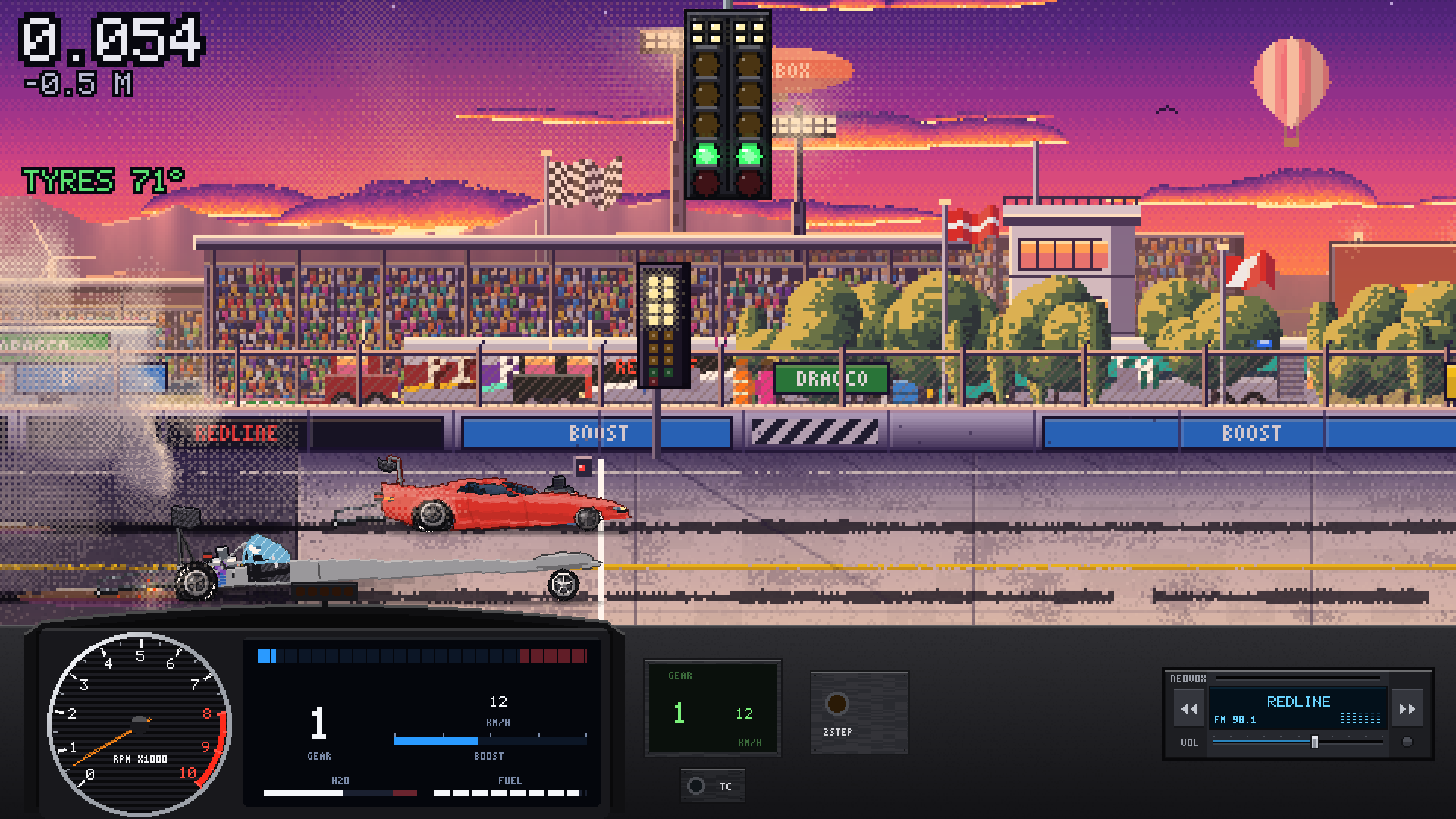
The logo and the Offline tag are gone from the top bar. Next to your driver there is now a calendar button and Next day on every tab, and the active car shows its class on asphalt, sand and mud, each with its own surface icon. A class still shows a question mark until the car has made a test run.
The Race tab got filters to match. Above the map and inside every venue you can switch classes on and off (several at once) and pick the surfaces you want. They start on the classes of your active car.
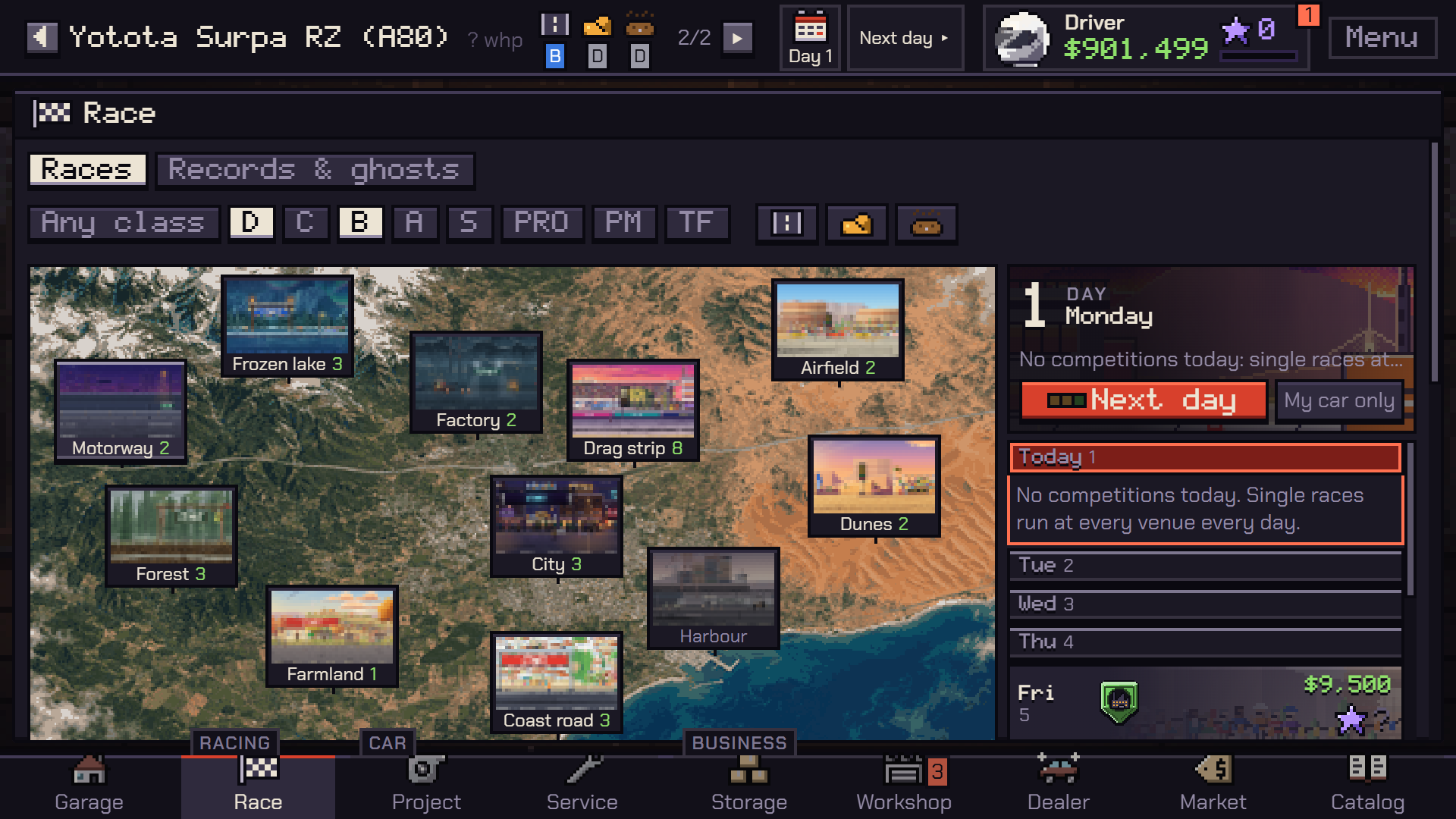
The race board itself is five times bigger: about 110 races a day, shared evenly between the eight classes, and it no longer depends on which cars you own. Before every race of a competition, the organiser checks the real class of your car.
A night drive between days
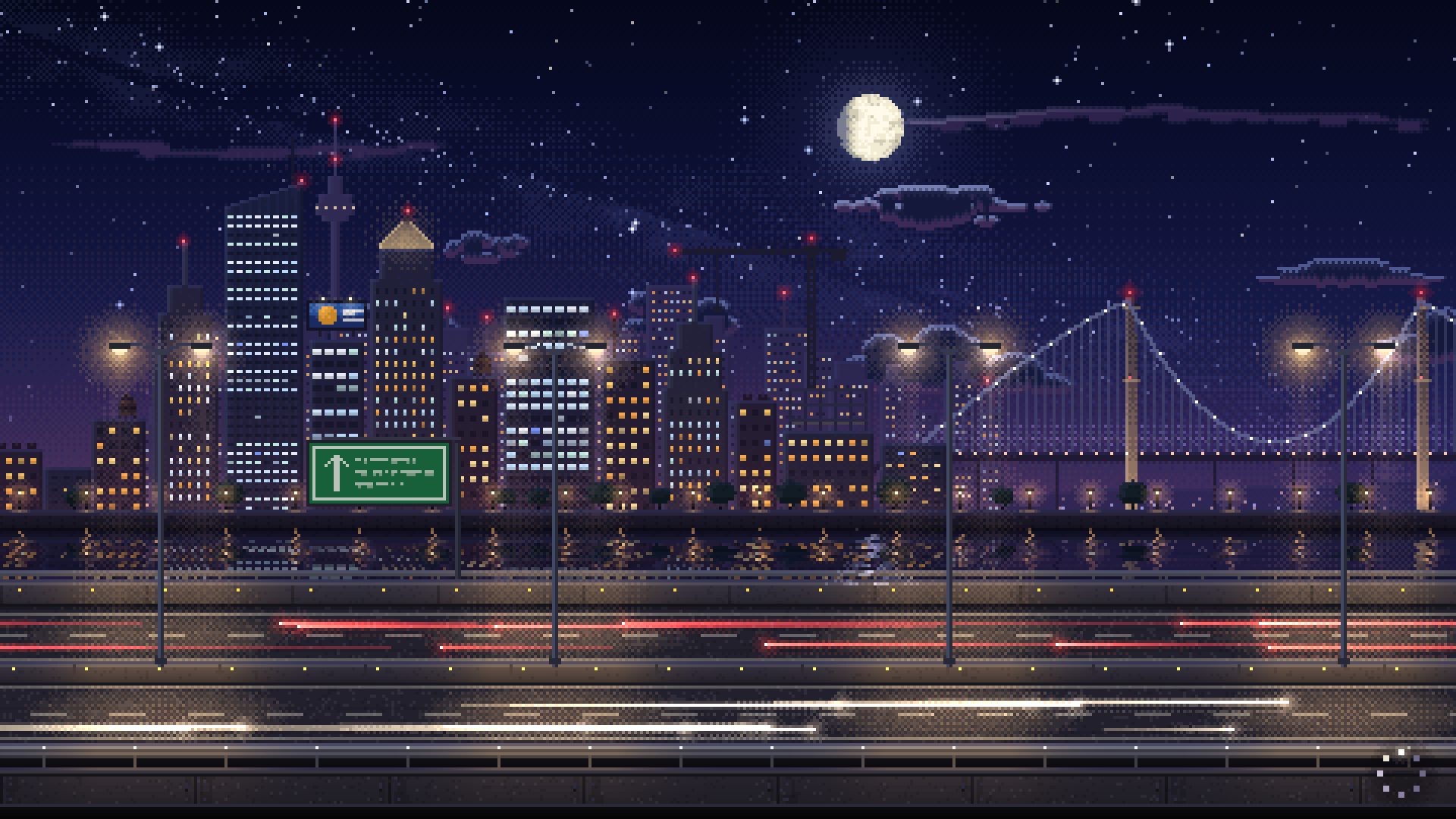
Pressing Next day used to mean a pause while the board was prepared. Now a short scene plays instead: a city skyline at night, a moon, and light trails on the highway. The sound is made in the game too, from highway hum, passing cars with the Doppler effect and distant horns, with a quiet lo-fi track underneath. The scene ends when the next day is ready.
Wraps, stickers, rims and lamp film
Project → Body is much bigger. Wraps are patterns in colours you choose, bought once and usable on every car. Stickers have their own editor: numbers, shapes and brand logos, placed, rotated and resized on the car, up to 32 per car, bought one by one or as a set.
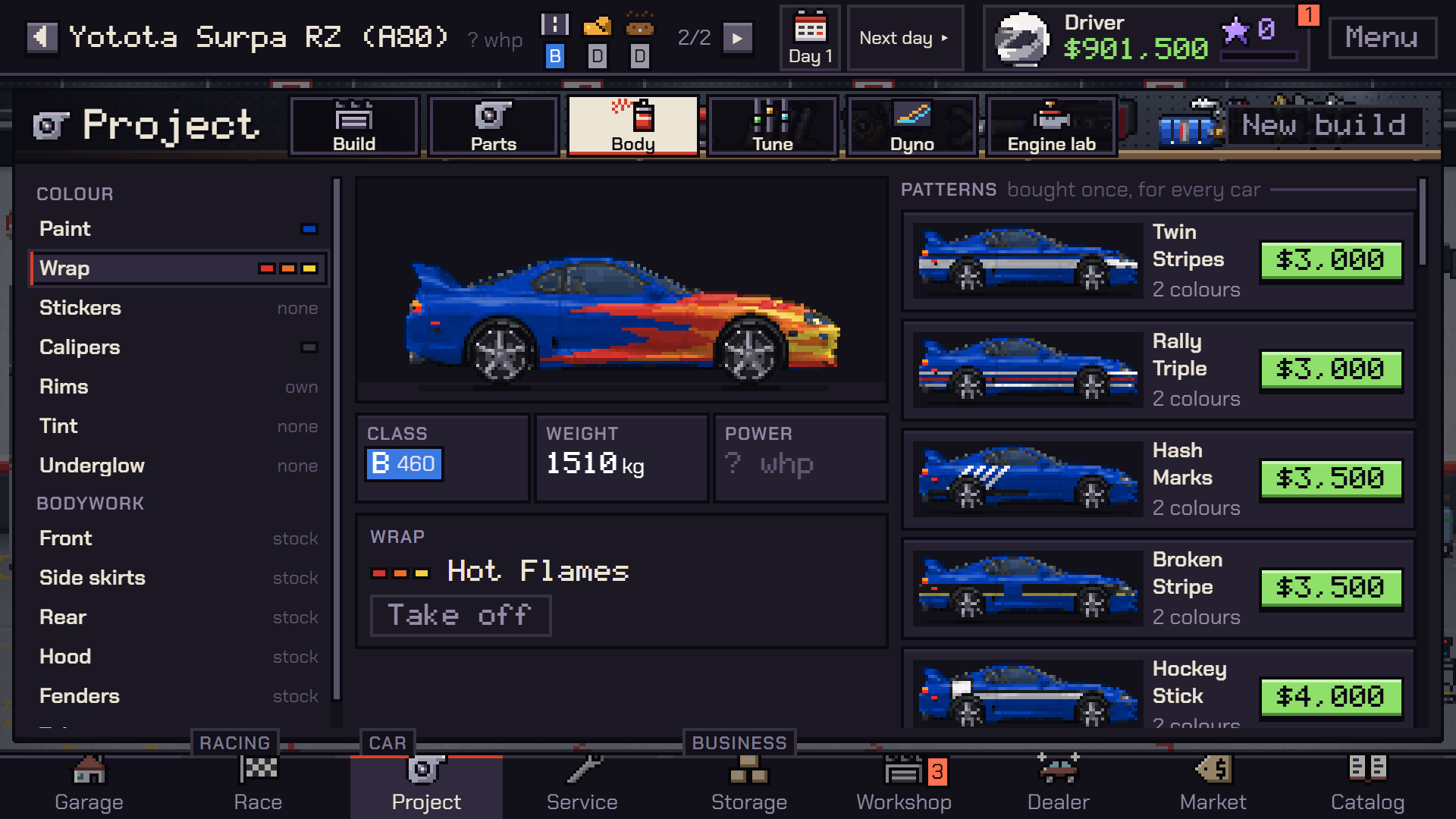
Rims were redrawn from scratch: more than 70 designs in 30 families and eight finishes, and you can paint them like the body. Headlights and tail lights take tinted and coloured film, and the beam on the road takes its colour. A car that stands out gets more attention from the police.
Also new
- Tyre grip is absolute. Wider tyres grip more, and the load on each tyre counts, so a heavy car on narrow tyres now loses time. Braking uses tyre width as well.
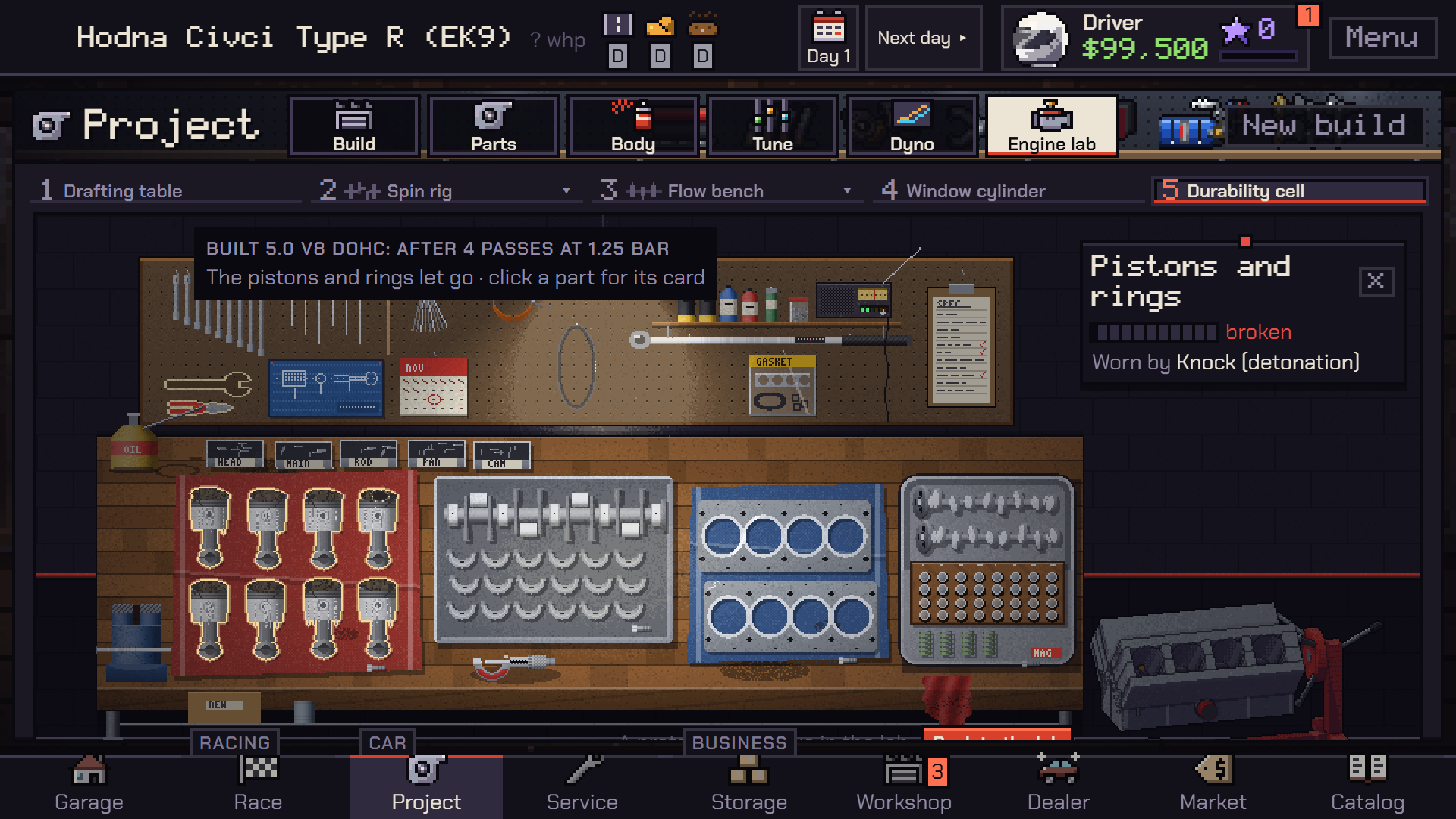
- Engine Lab as a development department. An engine is a prototype: you design it, run it in the test cells and take it apart on the teardown table when it fails. The wear of an engine and a gearbox stays hidden until you open them, and used cars show only what the seller claims.
- Brake pedal in every race, shift anti-lag with its own switch in Tune, and underglow kits with seven colour programs.
- Exhaust flames are simulated gas. They come from the burning gas in the pipe, in every scene.
- Engine sound for W16, rotary and flat-twin engines, with three porting stages for the rotary.
- A driver profile screen with a 3D driver, sponsors and a locker of looks.
What comes next
Records and ghosts on the four-lane strips come next. Wraps and stickers get more patterns, and more testing.
On Steam, Valve has accepted our Playtest and the store page now says Coming soon.
A new clip goes up every day on TikTok, Instagram, YouTube and X, and the Discord is open for questions and ideas. If this sounds like your kind of game, a wishlist on Steam helps more than anything else.