
This is not a recording: how we simulate engine sound
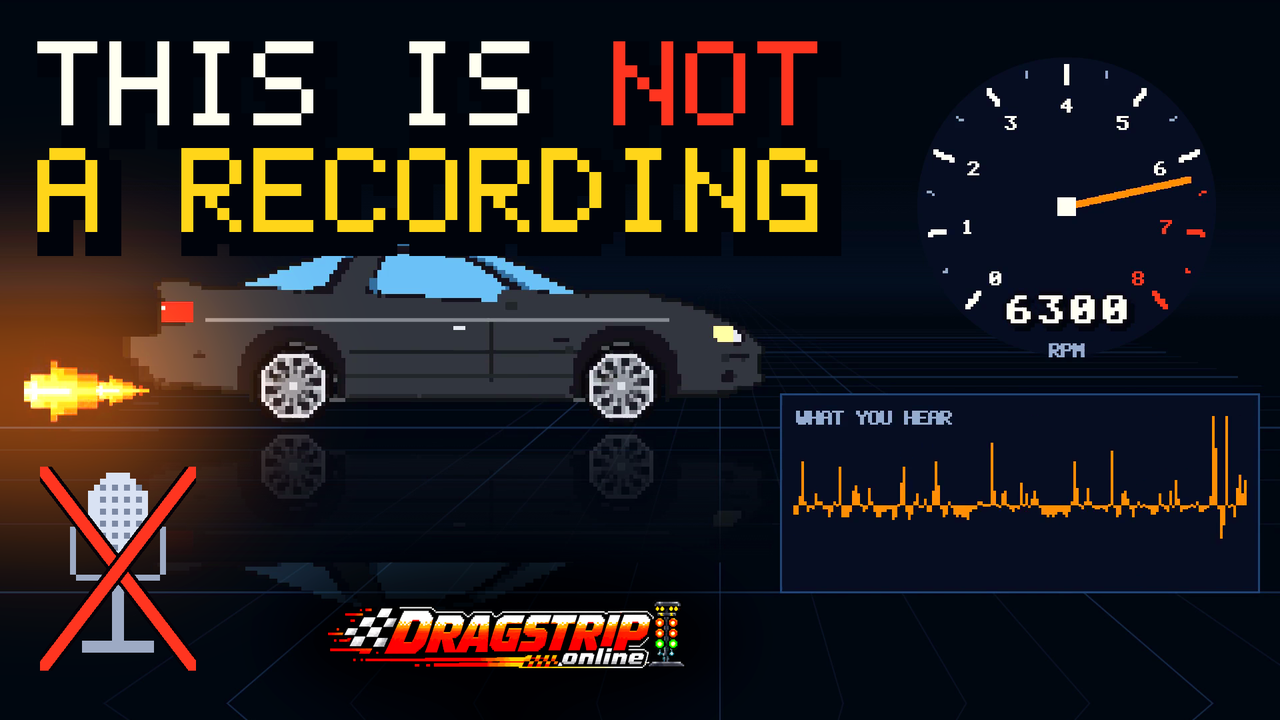
Nobody put a microphone behind the cars in this film. Every sample of the sound was calculated, from the gas inside the engine.
The film runs for a little over three minutes. If the player does not load, watch it on YouTube. The short version follows below.
Why not just record it
Dragstrip Online has more than 1,600 cars, 1,675 engines and over 6,000 parts, and any engine can go into any car. You cannot record all of that. So for a long time we faked it with a synth, and it did not sound great.
Then we stopped faking the sound and started simulating the engine.
It begins in the cylinder
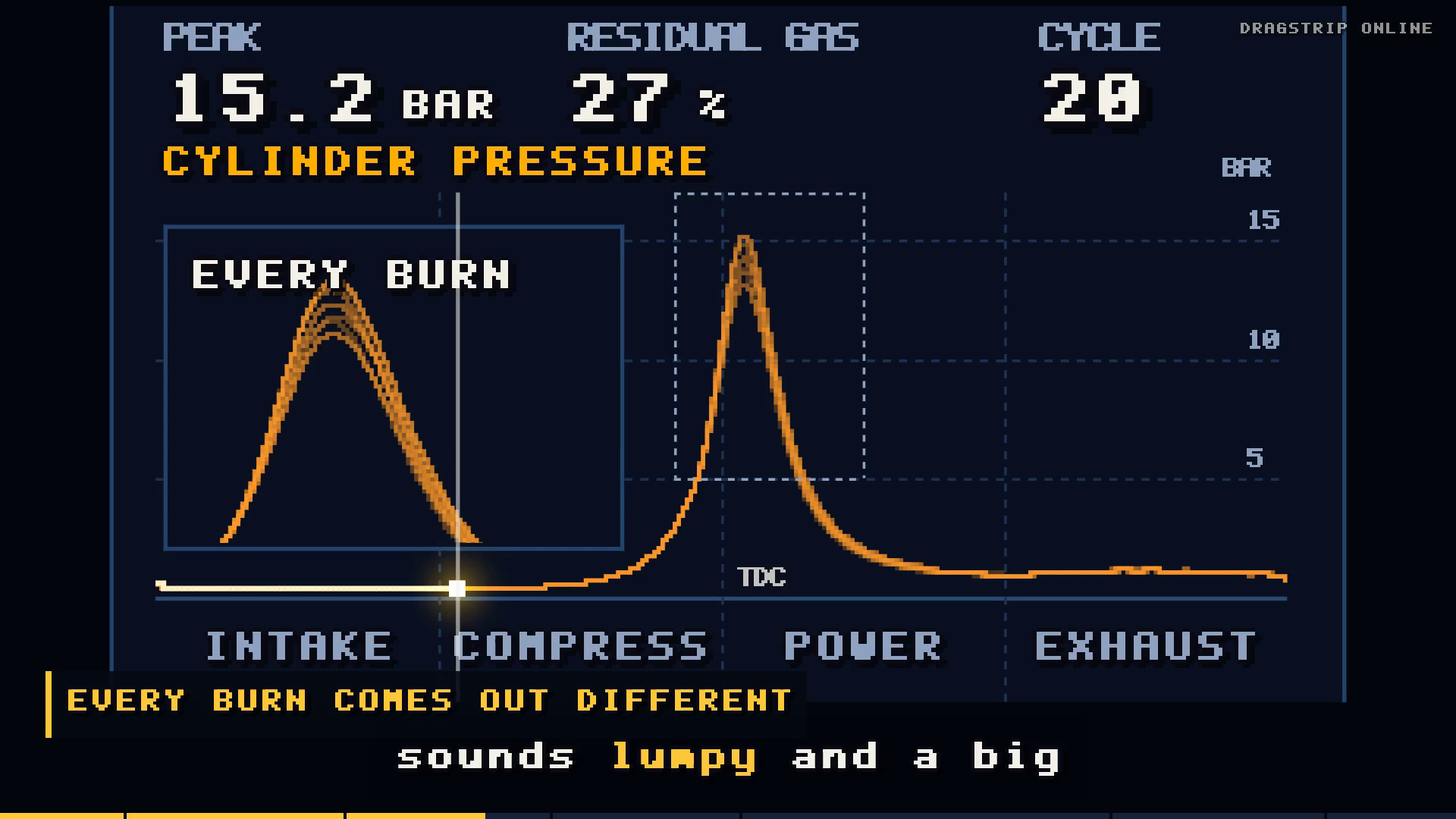
The model tracks the gas itself: how much there is, how hot it is and what it is made of. Valves open, and the gas rushes through them like it does in a real head. Sometimes backwards.
No two burns are the same, which is why an idle sounds lumpy and a big cam makes an engine lope.
Same code, different geometry
We never tell the game what a V8 sounds like. We give it bore, stroke, cam timing and firing order. An inline-four, a cross-plane V8 and a flat-plane V8 all run through the same code, and the burble and the scream come out on their own.
The exhaust is a network of pipes
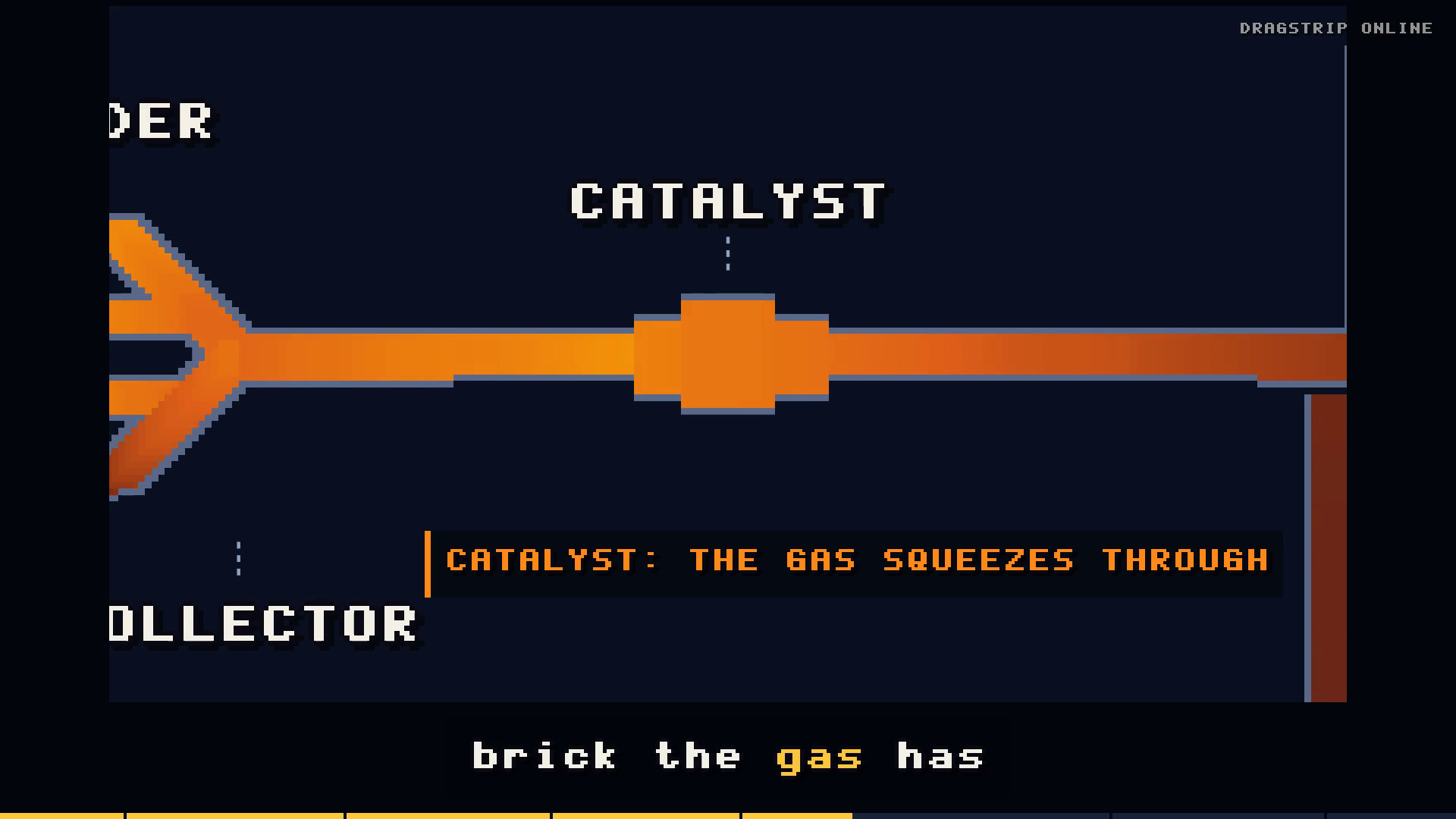
Then the pulse reaches the exhaust. Every pipe carries pressure waves in both directions. They bounce off the open tailpipe, split at every junction and slow down as the gas cools. A catalyst is a brick the gas has to squeeze through. A muffler is chambers and tubes with real dimensions.
So when you fit a new part, the sound changes because the plumbing changed. No part has a loudness setting. It only has a shape.
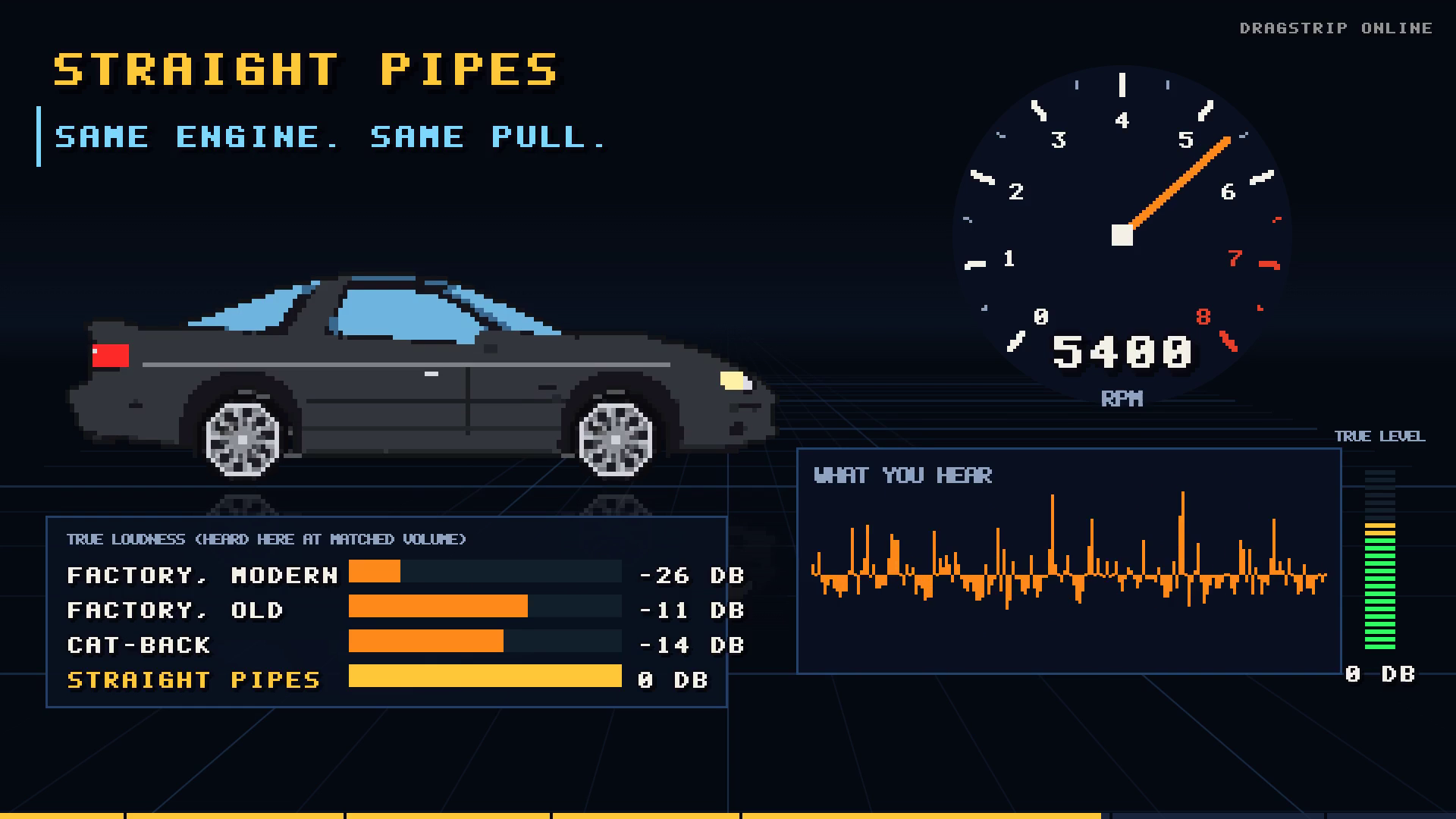
In the film the same V8 makes the same pull through four exhausts. They play at matched volume so you can compare the character, and the true levels from the model are on screen: the modern factory system comes out 26 dB quieter than straight pipes.
Unburnt fuel
The gas even remembers what is in it. Fuel that did not burn in the cylinder travels down the pipe, collects where it is hot, and lights.
A modern engine cuts its fuel when the throttle shuts, so it stays quiet. Give it a crackle map, and it pops.
Faster than real time
All of it runs faster than real time on a single processor core: 17 times faster for the inline-four, 8 times for the V8. That is what lets it play live while you race.
What comes next
It is still in the workshop. Turbos, intake noise and the rest of the engine list come next.
A new clip goes up every day on TikTok, Instagram, YouTube and X, and the Discord is open for questions and ideas. If this sounds like your kind of game, a wishlist on Steam helps more than anything else.