
Blowover: what happens when a dragster loses its wheelie bar
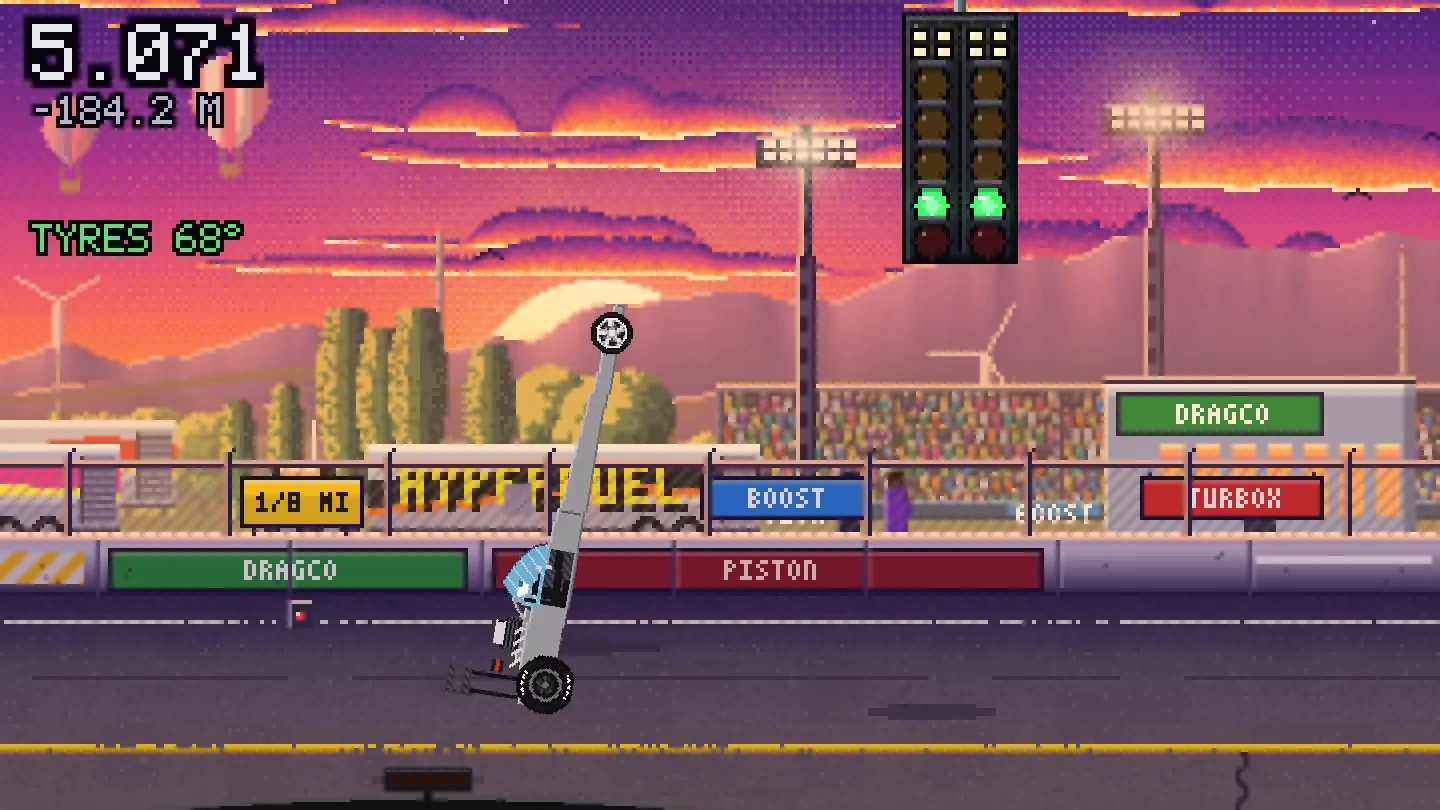
Real dragsters carry a wheelie bar, and there is a good reason for it. Take it off, give the car full power, and at some point the air gets underneath.
That is a blowover, and it is now in the game. It comes straight out of the physics, so nothing tells the car when to flip. If you want to see it first, here is the clip.
The underside is a wing
With the nose on the ground, air passes over and under the car and not much happens. With the nose up, the flat underside meets the air at an angle and starts working like a wing.
The game calculates that lift in one line: 0.6 × wheelbase × sin(pitch) × dynamic pressure, split evenly between the two axles. Two of those terms do most of the work:
- Wheelbase. A short street car hardly notices this force. A long dragster does.
- Dynamic pressure. It grows with the square of speed, so at 300 km/h there is nine times as much of it as at 100 km/h.
The result is a feedback loop. More pitch means more lift, and more lift means more pitch.
The point of no return
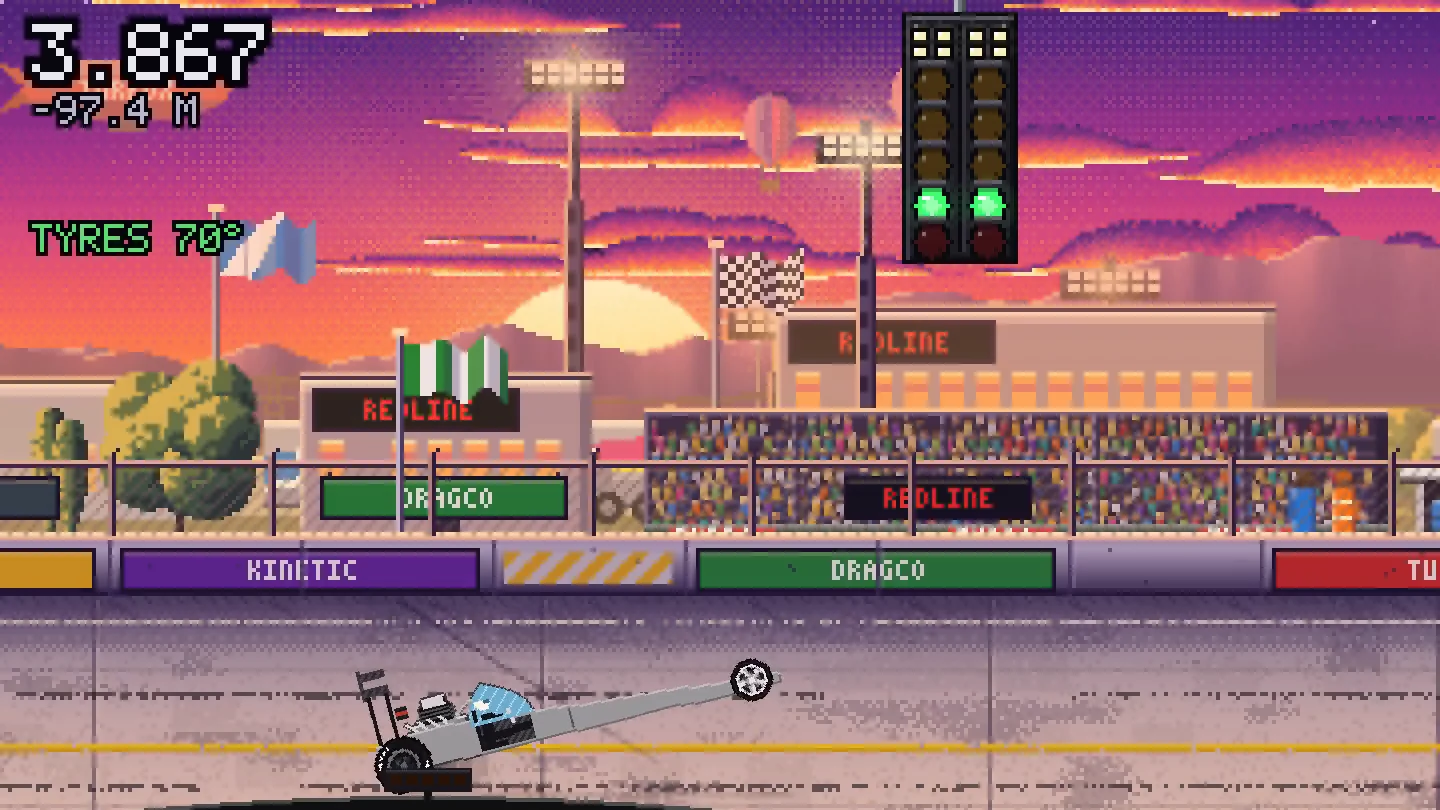
Past 0.6 radians of pitch, about 34 degrees, at 30 m/s (108 km/h) or more, the car is gone: the simulation marks it as blown over and the run ends in a crash. Below that speed the car only stands on its tail until you lift off the throttle.
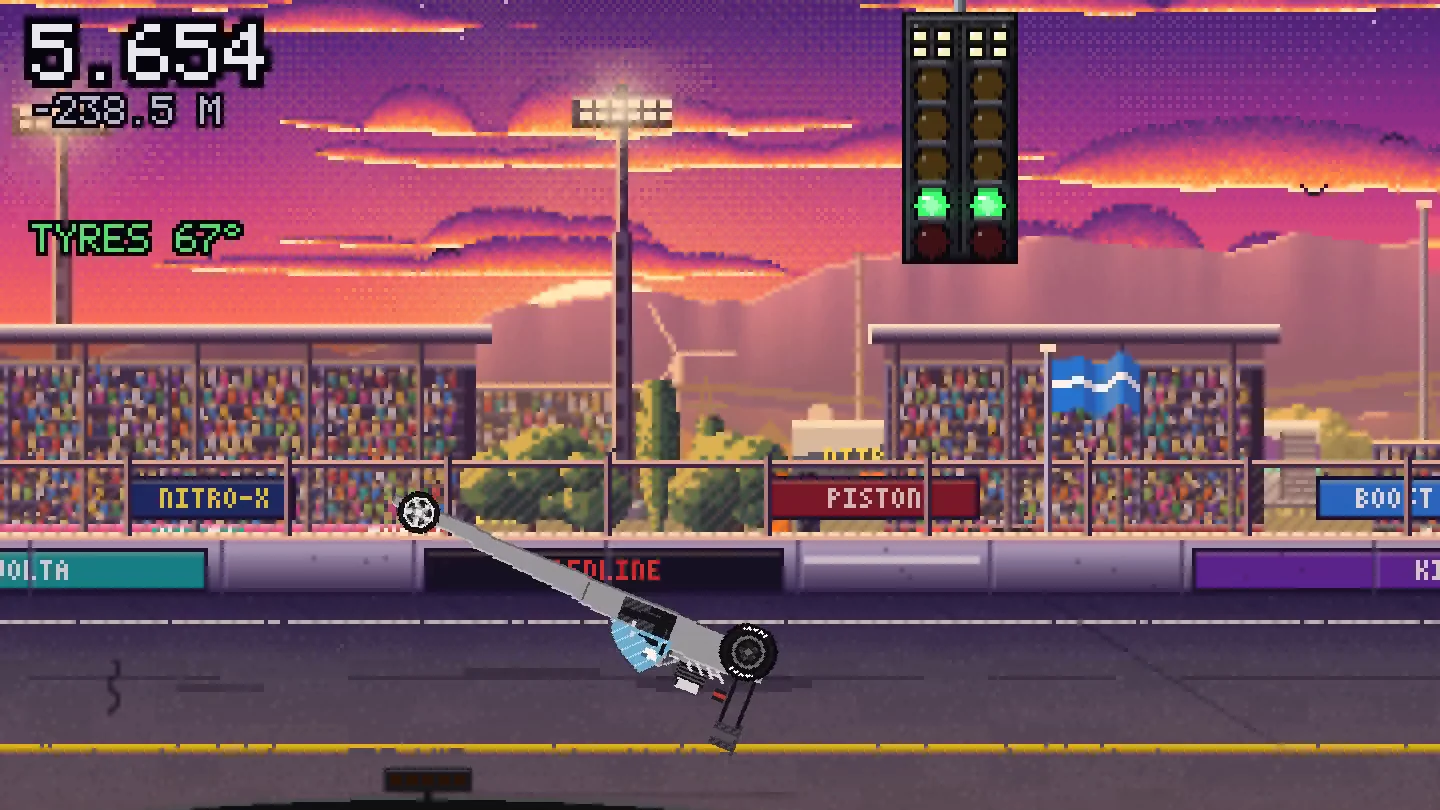
In the run behind these pictures nobody forced anything, and the car was driven by hand. It peaked at 243 km/h with the nose still climbing, and about five seconds after the launch it was standing nearly straight up.
What the wheelie bar does
A wheelie bar stops the pitch at a fixed angle, so the feedback loop never gets going. The bar takes the extra load and the nose stays low. That is why cars fitted with one practically never go over, and why this run needed the bar removed in the first place.
What happens next
The physics decides that the car has gone over. The flight itself is animation: about a second in the air, a landing on the roof, and a crushed body. Tall parts such as the rear wing break off and fly away as debris. Above 150 km/h the crash also brings an explosion and a fire, and the wreck keeps sliding down the track in flames.
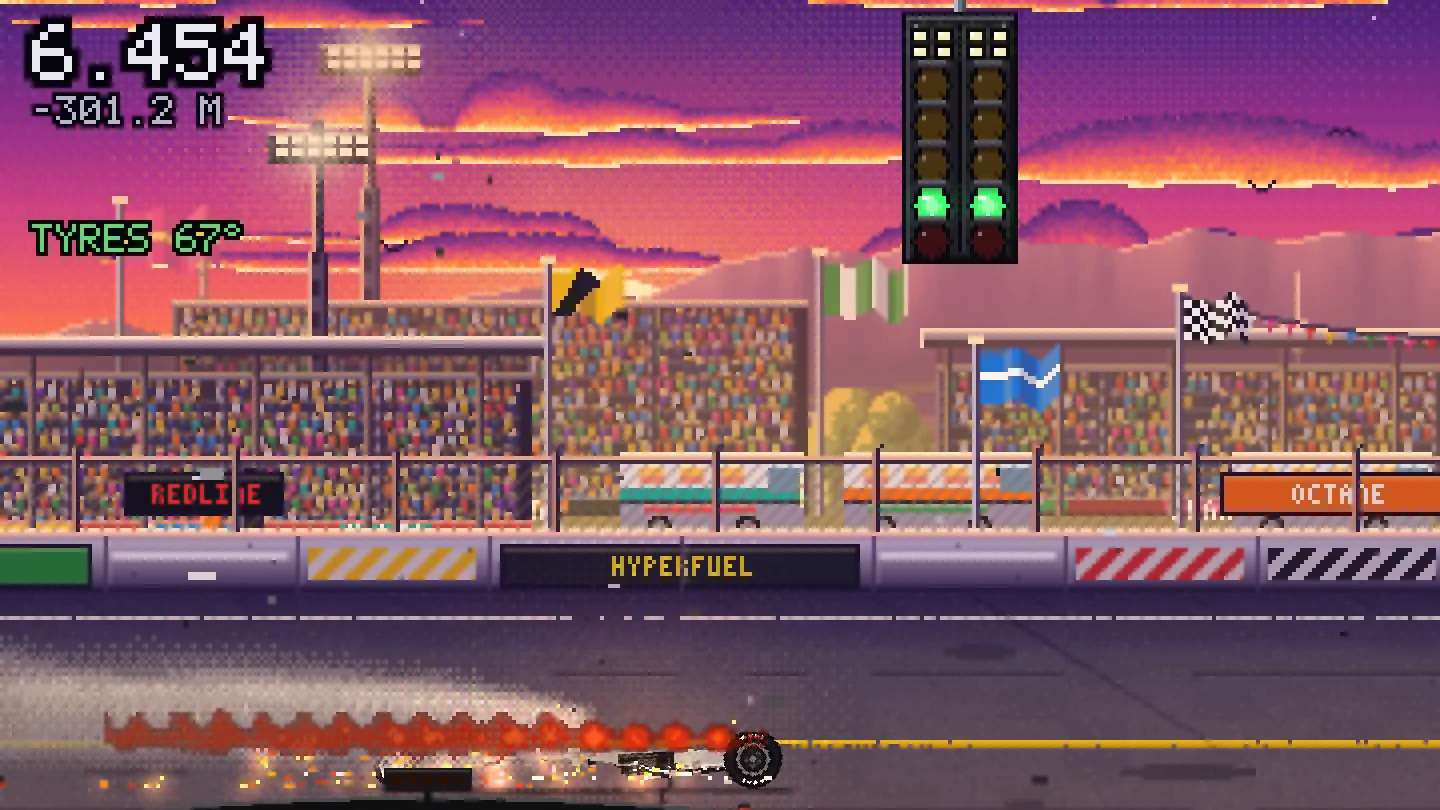
Keeping that part purely visual matters for online racing. The flip, the smoke and the fire never feed back into the simulation, so every machine works out the same result. And a car that crosses the line first and flips afterwards keeps its time.